English
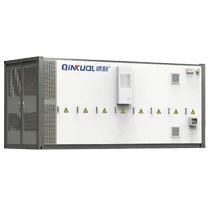
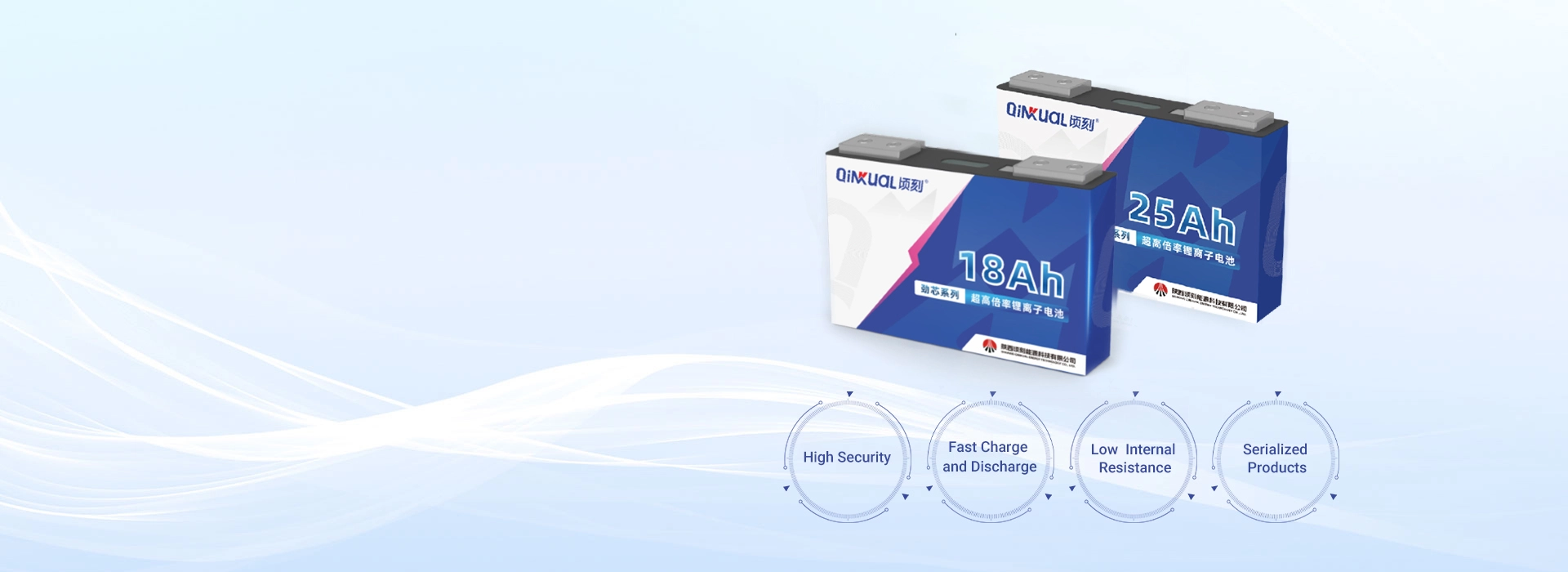
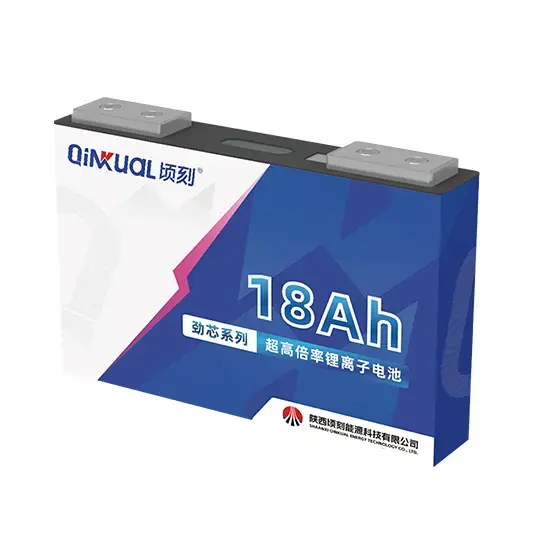
Ultra-high C-rate battery is featured in maximum 80C discharge and 10C discharge in -40℃.
Single cell supports the power of 4600W.
High Output: Delivers superior power output, ensuring optimal performance for high-demand applications.
Compact Design: Despite its high power capabilities, the cell maintains a compact and lightweight form factor.
Fast Charge: Capable of ultra-fast charging, significantly reducing downtime.
Quick Discharge: Supports rapid discharge rates, making it ideal for applications requiring quick bursts of energy.
Durability: Engineered to endure thousands of charge and discharge cycles with minimal capacity loss.
Reliability: Maintains consistent performance over an extended period, ensuring long-term reliability.

The ultra-high charge rate battery is ideal for special applications demanding ultra-high C-rate or low temperature performance. It could serve as the startup power or energy storage battery. The QINKUAI Ultra-High C-Rate Cell is engineered to excel in a variety of high-demand applications, providing exceptional power, efficiency, and reliability.





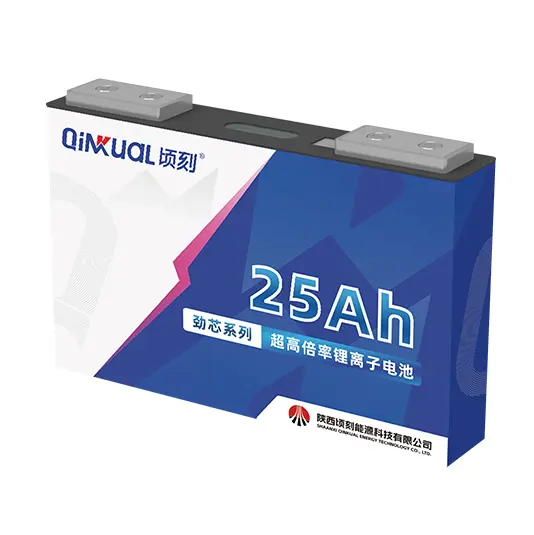
Yes. The QPF25GA 25Ah prismatic cell supports a maximum continuous charge rate of 8C, with pulse charging up to 10C (10s @ 50% SoC) — enabling an 80% recharge in under 8 minutes. This dramatically reduces downtime for industrial equipment and electric fleets, delivering rapid energy replenishment without compromising the cell’s 4,000+ cycle lifespan or thermal stability.
LiFePO4 (LFP) chemistry is inherently more thermally stable than NCM (Nickel Cobalt Manganese), and the QPF25GA’s prismatic design further reinforces this advantage. Even under maximum continuous discharge at 15C or pulse discharge at 20C (10s @ 50% SoC), the cell maintains excellent thermal control — backed by an ultra-low internal resistance of ≤1mΩ and an operating temperature range of -40°C to 60°C. This robust design significantly reduces the risk of thermal runaway while sustaining over 4,000 cycles, making it a reliable choice for the most demanding high-rate applications.
Yes. AI data centers demand instantaneous, high-power backup to bridge the gap between grid failure and generator startup — a critical window typically ranging from 6 minutes or less.
The QPF25GA is well-suited for this scenario thanks to:
15C continuous discharge — capable of delivering full power output within minutes
20C pulse discharge (10s) — handles sudden load spikes without voltage sag
≤1mΩ internal resistance — minimizes energy loss and heat during high-rate events
4,000+ cycle life — supports frequent test cycling and real backup events without premature degradation
Compared to traditional VRLA batteries, the QPF25GA offers faster response, higher power density, longer service life, and a significantly smaller footprint — making it an ideal building block for next-generation UPS and rack-level backup systems in AIDC environments.
LiFePO4 (LFP) chemistry offers a fundamentally more stable molecular structure than NCM, with a significantly higher thermal runaway threshold. For the QPF25GA, this safety advantage is further reinforced by:
≤1mΩ internal resistance — minimizes heat generation at high discharge rates
Prismatic form factor — superior structural integrity and heat dissipation vs. cylindrical cells
Wide operating range (-40°C to 60°C) — stable performance without thermal stress
15C continuous / 20C pulse discharge — sustained under extreme load without safety compromise
This makes the QPF25GA the preferred choice for mission-critical applications where thermal runaway is simply not an option.
Address
No.88 Hangtian East Rd, Xi'an National Civil Aerospace Industrial Base, Shaanxi Province
Call us
Email us
Don't hesitate to email us or use our contact data if you have any question.