English
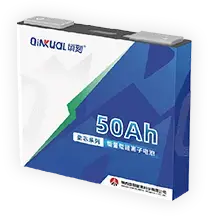
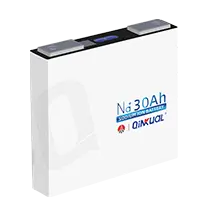
A 50Ah 3C/6C prismatic cell is a better choice than standard lithium cells for applications that require high current output, fast charging, and repeated power cycling. With a 3C continuous discharge capability and 6C pulse discharge performance, this type of cell is designed for demanding environments such as electric vehicles, industrial equipment, robotics, and high-power energy storage systems.
Standard lithium cells are often optimized for energy density and cost efficiency, while a high-performance 50Ah prismatic cell focuses on power delivery, thermal stability, and long-term reliability under heavy loads. For applications where rapid acceleration, peak power support, or frequent charge-discharge cycles are required, advanced LFP battery technology provides significant operational advantages.
Choosing between these battery solutions depends on whether the priority is maximum energy capacity or high-power performance.
A 50Ah 3C/6C prismatic cell is a lithium iron phosphate (LiFePO4) battery cell with a rated capacity of 50 ampere-hours, designed for high-rate charging and discharging.
The C-rate indicates how quickly a battery can deliver or absorb current relative to its capacity.
For a 50Ah cell:
| C-Rate | Current Capability |
|---|---|
| 1C | 50A |
| 3C Continuous Discharge | 150A |
| 6C Pulse Discharge | 300A |
This means the cell can provide high instantaneous power when required while maintaining stable voltage output.
Compared with conventional lithium cells, a high-rate 50Ah prismatic cell uses optimized electrode materials, lower internal resistance design, and advanced thermal management strategies to support demanding applications.
The main difference between these two battery solutions is their performance focus.
Standard lithium cells are generally designed for balanced energy storage, while high-rate prismatic cells are engineered for power-intensive applications.
| Feature | Standard Lithium Cell | 50Ah 3C/6C Prismatic Cell |
|---|---|---|
| Main Advantage | Energy capacity and cost efficiency | High power output and fast response |
| Discharge Capability | Moderate current output | High current delivery |
| Charging Speed | Normal charging | Faster charging capability |
| Peak Power | Limited | Excellent |
| Thermal Performance | Depends on chemistry | Optimized for high-rate operation |
| Cycle Stability | Good | Excellent under high-power cycling |
| Application Focus | Consumer electronics, general storage | EVs, industrial systems, high-power ESS |
For systems requiring frequent acceleration, rapid charging, or high load switching, a high-performance LFP battery solution provides better reliability.
High-power applications require more than just large battery capacity. They need batteries that can deliver consistent performance under demanding operating conditions.
Modern LFP battery technology has become popular because it offers:
LiFePO4 chemistry provides excellent safety performance due to its stable cathode structure. This makes it suitable for applications involving high current operation and continuous cycling.
High-quality LFP batteries can maintain strong capacity retention over thousands of cycles when operated under proper conditions.
Unlike some conventional lithium chemistries that experience significant voltage drops under heavy loads, LFP cells provide reliable discharge performance.
These advantages make LFP-based prismatic cells increasingly attractive for commercial and industrial battery systems.
A 50Ah prismatic cell is specifically designed for applications where power availability directly affects system performance.
High-power battery cells improve:
Acceleration performance
Regenerative braking efficiency
Fast charging capability
Driving reliability under heavy loads
For commercial EVs, such as delivery vehicles and electric buses, high-rate cells help reduce downtime and improve operating efficiency.
Industrial machines often experience sudden power demands. High-rate prismatic cells support:
Automated guided vehicles (AGVs)
Robotics systems
Material handling equipment
Electric machinery
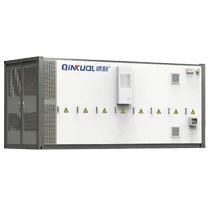
Commercial energy storage requires batteries capable of quickly responding to power fluctuations.
High-rate cells can support:
Peak demand management
Renewable energy balancing
Backup power applications
Grid-support systems
A higher C-rate does not automatically mean better performance for every application.
The ideal battery depends on system requirements.
A high-rate 50Ah prismatic cell is suitable when the application requires:
Frequent high-current discharge
Fast charging cycles
Rapid energy absorption
Strong acceleration performance
However, applications focused mainly on long-duration energy storage may prioritize larger capacity cells with lower C-rates.
Battery selection should consider:
Required power output
Operating environment
Charging frequency
Expected cycle life
Total system cost
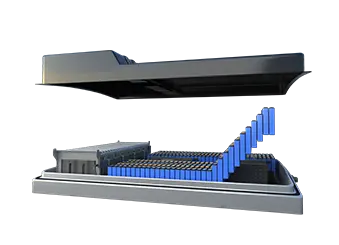
Prismatic cells are widely used in large battery systems because of their structural advantages.
The rectangular design allows more efficient use of battery pack space compared with many cylindrical cell configurations.
Large flat surfaces improve heat dissipation, which is important for high-current applications.
Prismatic cells reduce the complexity of module assembly and allow manufacturers to create customized battery solutions.
For EV manufacturers and energy storage companies, these benefits make prismatic LFP battery solutions easier to integrate into large-scale systems.
Fast charging places significant stress on battery materials. High-rate prismatic cells are designed with internal structures that reduce charging limitations.
A 3C/6C design helps improve:
Charging efficiency
Power recovery speed
Fleet operation productivity
Battery availability
For commercial electric vehicles, faster charging can significantly increase daily utilization by reducing charging intervals.
The actual charging speed depends on:
Charger power
Battery management system settings
Temperature conditions
Cell design parameters
Selecting the correct battery requires evaluating the complete application requirements.
High power output is required
Equipment operates under frequent load changes
Fast charging is important
Long cycle life is expected
Space efficiency matters
Energy capacity is the primary goal
Power demand is relatively stable
Cost optimization is the main consideration
High discharge rates are not required
Working with an experienced battery supplier can help match cell characteristics with real operating conditions.
A 50Ah prismatic cell is commonly used in electric vehicles, industrial equipment, robotics, renewable energy storage, and other applications requiring high power output and reliable cycling performance.
3C refers to a continuous current capability three times the battery capacity, while 6C usually represents a higher pulse discharge capability. For a 50Ah battery, 3C equals 150A and 6C equals 300A.
High-quality prismatic LFP cells can achieve long cycle life because of their stable chemistry and robust structural design. Actual lifespan depends on operating conditions and battery management.
For vehicles requiring fast charging, strong acceleration, and frequent power cycling, high-rate LFP prismatic cells are usually more suitable. Standard lithium cells may be better for applications where energy capacity and cost are the primary factors.
The choice between a 50Ah 3C/6C prismatic cell and standard lithium cells depends on application requirements. Standard lithium batteries can provide economical energy storage, but high-power applications increasingly require batteries that can deliver fast response, stable output, and long-term durability.
A high-performance 50Ah prismatic cell based on advanced LFP battery technology offers the balance of safety, power capability, and cycle life needed for modern EVs, industrial systems, and commercial energy storage solutions.
As industries continue moving toward electrification, high-rate LFP prismatic cells will play an increasingly important role in applications where battery power performance directly impacts operational efficiency.