English
When clients or engineers ask what makes LFP batteries so reliable, the answer isn't just "they're safer". The real reason lies deep inside — in the chemistry, materials, and design philosophy behind lithium iron phosphate battery technology.
In this article, we'll uncover how LFP battery technology actually works, what its key materials are, and why it's becoming the dominant choice for commercial energy storage and electric mobility worldwide.
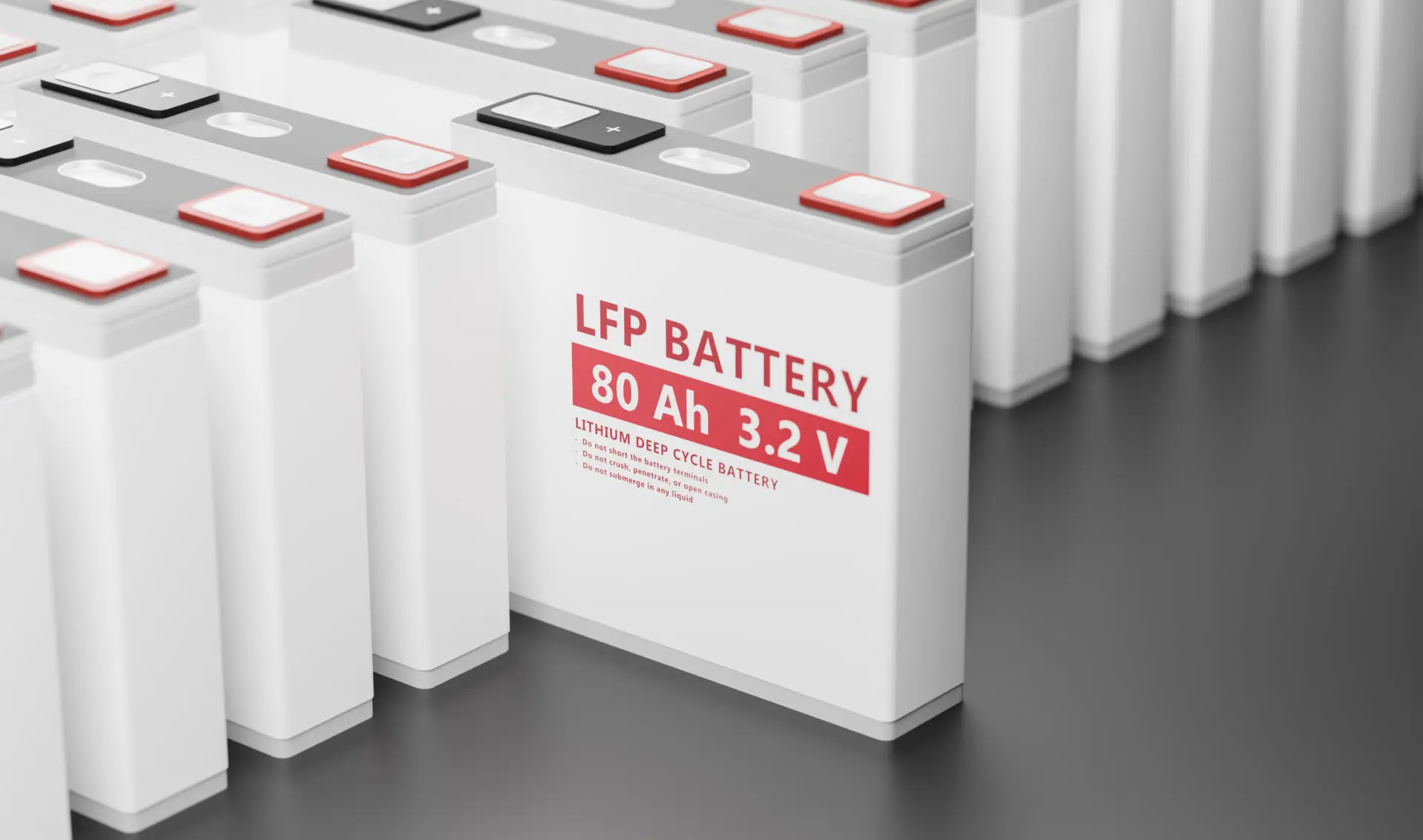
At the core of lithium iron phosphate battery technology (commonly called LFP technology) is the unique chemistry of its cathode material — lithium iron phosphate (LiFePO₄).
When the battery discharges, lithium ions move from the graphite anode through the electrolyte and into the LiFePO₄ cathode, releasing electrical energy to power the load. During charging, the process reverses — lithium ions leave the cathode and return to the anode.
This process sounds similar to other lithium-ion batteries, but what sets LFP apart is its olivine crystal structure. The phosphate (PO₄³⁻) group forms strong chemical bonds with iron and oxygen, making the cathode extremely stable and resistant to oxygen release or thermal runaway.
That's why LFP battery technology offers unmatched safety and longevity, even under high current, high temperature, or abusive conditions — critical factors for industrial and commercial energy storage systems.
Behind every reliable battery lies its materials. Understanding LFP battery materials helps engineers and project developers make smarter decisions about performance, cost, and lifecycle management.
The LiFePO₄ cathode is the defining feature of LFP technology.
It uses abundant iron instead of expensive nickel or cobalt, reducing cost and geopolitical risk.
The olivine structure provides exceptional thermal stability — meaning the battery is far less likely to overheat or ignite.
However, the trade-off is lower conductivity. To counter this, manufacturers apply carbon coatings or nano-engineering techniques to boost conductivity and energy density.
The anode is typically made from graphite, which stores lithium ions during charging.
Its structure and binder composition affect charge rate, cycle life, and low-temperature performance.
Some high-performance cells use doped or silicon-blended graphite to improve efficiency.
The electrolyte is a lithium salt (e.g., LiPF₆) dissolved in organic solvents.
It serves as the medium for ion transport between the anode and the cathode.
The separator — a thin polymer film — prevents short-circuiting while allowing ion flow.
In modern lithium iron phosphate battery technology, new electrolyte additives enhance thermal stability and suppress gas generation at high voltages.
Because LiFePO₄ has lower inherent conductivity, manufacturers often add conductive carbon, graphene, or nanostructured coatings.
These enhancements are crucial for high-power energy storage systems, enabling faster charge/discharge rates and consistent performance over thousands of cycles.
Beyond the cells themselves, LFP battery technology includes module-level materials: bus bars, thermal interface materials, insulation, and structural components.
These dictate the safety, heat management, and service life of commercial and industrial energy storage systems (ESS).
Over the past five years, LFP technology has rapidly overtaken other lithium chemistries like NMC (nickel manganese cobalt) in many markets. Here's why.
The strong Fe–P–O chemical bonds in LiFePO₄ make oxygen release nearly impossible under normal conditions — even if the cell is punctured or overcharged. This eliminates the runaway fire risk seen in some cobalt-based batteries.
For energy storage facilities, data centers, and EV fleets, this safety factor alone makes LFP the chemistry of choice.
Where traditional lithium-ion batteries last 2,000–3,000 cycles, LFP batteries routinely exceed 6,000–10,000 cycles under proper management.
That translates into 10–15 years of service life, making lithium iron phosphate battery technology a long-term, low-maintenance investment for commercial users.
Cobalt and nickel prices are volatile and regionally concentrated. LFP relies on iron and phosphate — both abundant and globally available.
For manufacturers and integrators like Qinkual Energy, this means a stable cost base and predictable production capacity, even amid global supply disruptions.
Although LFP cells have slightly lower energy density, they are cheaper to produce and outlast most competitors. The result: a lower cost per cycle — the true measure of economic performance for ESS systems.
From grid-scale storage to electric buses, forklifts, telecom backup, and residential solar systems — LFP technology fits nearly every application that values safety, durability, and cost-effectiveness over extreme energy density.
No battery chemistry is perfect, and understanding trade-offs helps optimize system design.
LFP batteries typically offer 90–160 Wh/kg — lower than NMC or NCA cells (180–250 Wh/kg).
For stationary applications, this is a minor issue, but for compact EVs or drones, energy density may limit range.
With a nominal voltage of ~3.2 V per cell (compared to 3.6–3.7 V for NMC), pack designers need more cells in series to achieve equivalent system voltage.
LFP batteries suffer from reduced performance in low temperatures (capacity loss, sluggish charge acceptance). Integrating thermal management or heating systems solves this for northern deployments.
Raw LiFePO₄ is a poor conductor. Advanced material engineering — such as carbon coating, doping, or nano-structuring — is essential to achieve commercial-grade power density.
The industry is rapidly evolving, turning these weaknesses into strengths through material innovation and system design.
Researchers are developing LMFP (Lithium Manganese Iron Phosphate) — blending manganese to boost energy density while preserving safety.
Improved synthesis methods (hydrothermal, solid-state, or spray-drying) refine particle size and homogeneity, enhancing conductivity.
Modern electrolytes include additives that stabilize the solid-electrolyte interface (SEI) and reduce degradation.
New solvent systems improve low-temperature operation and extend calendar life.
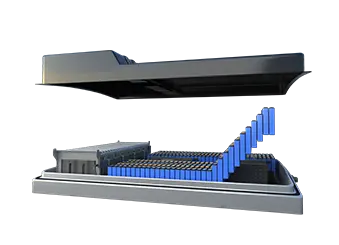
LFP's inherent stability allows closer cell spacing and simplified pack structures.
Manufacturers can eliminate module casings, increasing volumetric energy density and lowering costs — a concept known as Cell-to-Pack (CTP).
Smart BMS platforms constantly monitor cell temperature, voltage, and current, ensuring optimal charge/discharge conditions.
Integrated thermal management allows LFP batteries to perform reliably from -20°C to 55°C.
For businesses investing in renewable energy or peak-shaving projects, LFP battery technology delivers clear operational advantages:
Safety = Business Continuity
Lower risk of fire or thermal runaway means fewer safety certifications, lower insurance costs, and improved project bankability.
Longevity = Lower Total Cost of Ownership (TCO)
A well-engineered LFP system can outlast the PV or wind system it supports. Over a 15-year span, the cost per kWh delivered is significantly lower than with NMC or lead-acid alternatives.
Scalability = Flexible Project Design
LFP modules can scale from small commercial systems (100 kWh) to multi-MWh utility-scale plants, with standardized rack-mount or containerized designs.
Environmental Responsibility
LFP cells are free of cobalt and nickel — both environmentally and ethically controversial materials.
Easier recycling processes and lower toxicity make them more sustainable for long-term deployment.
Stable Global Supply Chain
Iron, phosphate, and carbon are widely available, ensuring continuity and predictable costs.
For factories or logistics centers, LFP technology provides high-power output for load balancing, demand-response participation, and backup power.
In renewable systems, LFP batteries store excess energy during the day and release it during peak evening demand — improving energy utilization and reducing grid stress.
Fleet operators favor LFP batteries for their stable temperature performance and long lifespan. In urban transit, the slightly lower energy density is offset by superior safety and lower maintenance.
In remote installations or telecom towers, LFP's low maintenance and high efficiency ensure reliable operation with minimal human intervention.
Material selection and processing determine not just performance, but also cost, safety, and consistency across large production runs.
Cathode material synthesis: Particle size and coating uniformity directly influence charge/discharge efficiency.
Binder and conductive additives: Control electrode adhesion and current distribution.
Electrode coating technology: Affects yield rate and internal resistance in mass production.
Cell assembly and formation: The precision of electrolyte filling, sealing, and formation cycling sets long-term reliability.
Manufacturers with strong control over these LFP battery materials and production processes — like Qinkual Energy's partners — deliver higher-performing cells with predictable behavior across thousands of cycles.
Q1: What makes LFP batteries different from other lithium-ion types?
A: LFP batteries use lithium iron phosphate as the cathode, offering better thermal stability and safety, longer cycle life, and lower cost. However, they have lower energy density compared to nickel-based chemistries.
Q2: How long do LFP batteries last?
A: Commercial-grade LFP battery technology can achieve 6,000–10,000 cycles or more, translating to 10–15 years of reliable operation under proper management.
Q3: Are LFP batteries good for cold climates?
A: LFP chemistry can operate in cold environments but requires thermal management or pre-heating for charging below 0°C. Modern BMS systems handle this automatically.
Q4: What are LFP batteries made of?
A: They consist of LFP battery materials — lithium iron phosphate (cathode), graphite (anode), lithium salt electrolyte, separator, and conductive carbon coatings.
Q5: Is LFP the future of energy storage?
A: Absolutely. Given its safety, stability, and cost-effectiveness, lithium iron phosphate battery technology is now the preferred chemistry for most grid, commercial, and renewable storage applications.
As an expert in battery storage operations and sales, I can confidently say: LFP technology represents the future of scalable, safe, and sustainable energy storage.
Its chemistry delivers what today's market values most — safety, longevity, cost stability, and environmental responsibility. For project developers, integrators, and investors, understanding LFP battery materials and lithium iron phosphate battery technology isn't just technical knowledge — it's a competitive edge.
At Qinkual Energy, we combine technical expertise with market insight to deliver optimized LFP-based storage systems for industrial, commercial, and renewable applications.
Whether you're designing a 500 kWh commercial battery system or a multi-MWh utility-scale project, our LFP battery technology ensures efficiency, reliability, and return on investment that lasts.