English

When temperatures drop, even the most advanced batteries face performance challenges — and LiFePO₄ batteries are no exception. But what actually happens to a LiFePO₄ battery in cold weather? More importantly, how can you protect it and maintain reliable performance year-round?
Let's dive straight into the technical facts, real-world behavior, and professional best practices that every energy storage operator, integrator, and EV fleet manager should know.
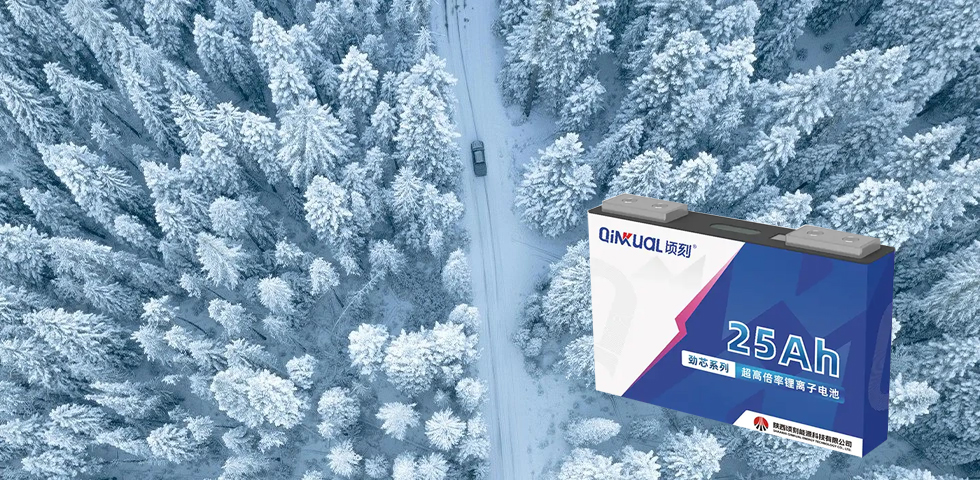
At low temperatures, the electrochemical reactions inside a lithium iron phosphate battery slow down significantly. The viscosity of the electrolyte increases, internal resistance rises, and lithium-ion movement between electrodes becomes restricted.
This means:
Reduced capacity: At -10°C, usable capacity can drop by 30–40%.
Higher internal resistance: Power output and efficiency decrease.
Voltage drop: Cold cells may show premature “empty” voltage even when capacity remains.
Risk of lithium plating: If you start charging a lithium iron phosphate battery below 0°C, lithium can deposit on the anode surface, causing irreversible damage.
While discharging at cold temperatures is generally safe, charging below freezing is where problems start.
One of the most common misconceptions is that as long as a LiFePO₄ battery "turns on", it's safe to charge. In reality, charging a lithium iron phosphate battery when the cell temperature is below 0°C can trigger lithium plating — a process where lithium ions form metallic deposits instead of intercalating into the graphite anode.
This leads to:
Permanent capacity loss
Reduced cycle life
Possible internal short circuits if metallic lithium grows dendrites
In short:
Discharging below 0°C = usually safe (with lower performance)
Charging below 0°C = unsafe and potentially damaging
Modern Battery Management Systems (BMS) in quality LiFePO₄ packs include low-temperature charge cutoffs to prevent damage. However, operators must still ensure proper thermal management during cold starts or nighttime charging.
| Function | Recommended Range | Absolute Limits |
Discharging | 0°C to 45°C | -20°C to 55°C |
Charging | 5°C to 45°C | 0°C (with preheating) to 55°C |
Storage | 10°C to 35°C | -20°C to 45°C |
At lower temperatures, lithium iron phosphate battery storage can still be safe if the battery is at partial charge (40–60%) and stored in a dry, insulated environment.
If you leave LiFePO₄ batteries in unheated warehouses, RVs, or outdoor enclosures through winter, here's what happens inside:
Self-discharge slows down — unlike lead-acid, LFP cells hold charge well even after months of inactivity.
Electrolyte thickens — internal resistance rises.
If fully charged, chemical stress increases — high state of charge (SOC) at low temperatures accelerates degradation.
Best storage practice: keep your lithium iron phosphate battery storage at 40–60% SOC in a temperature-controlled environment (ideally 15–25°C). Avoid both full and empty storage states.
In regions like Canada, Northern Europe, or northern China, solar + storage installations often face harsh winters. Morning temperatures can fall below -10°C while panels begin producing power as soon as the sun rises.
If your storage system lacks temperature sensing or pre-heating, PV-generated current may start charging the lithium iron phosphate battery immediately — even though cell temperature is still below freezing.
The result?
Gradual lithium plating and capacity loss across the winter season.
Solution:
Use a BMS with temperature-controlled charge logic.
Add a heating pad or self-heating module integrated into the battery pack.
Delay charging until the internal temperature reaches 5–10°C.
Professional-grade systems should include:
Insulated battery enclosures
Heating elements or mats powered by the grid or solar energy
Temperature sensors linked to the BMS
Ventilation for humidity control
For commercial systems, this isn't optional — it's an industry standard for reliability and safety.
A well-designed BMS is your first line of defense against cold damage.
It should:
Block charging below a defined threshold (typically 0–5°C)
Enable pre-heating before charging resumes
Log temperature history for diagnostics
Some advanced LFP technology packs can automatically pre-heat using internal resistance or low-voltage trickle currents before charging.
For systems powered by solar or generators:
Charge during warmer daylight hours.
Avoid early-morning charging in freezing conditions.
Use programmable logic controllers (PLC) or hybrid inverters with temperature sensors to manage charging windows.
In commercial and industrial projects, site design matters as much as the chemistry itself.
For lithium iron phosphate battery storage in northern climates, locate containers in semi-heated control rooms or underground spaces.
Include passive insulation (foam, mineral wool) in battery cabinets.
Consider low-wattage heat pads that maintain minimum internal temperature during long idle periods.
Cold-related degradation often happens gradually and invisibly.
Operators should:
Monitor cell temperatures during each charge cycle
Log voltage imbalance across modules (as cold can accentuate drift)
Inspect heaters, thermostats, and thermal insulation quarterly
Remote monitoring platforms integrated with the BMS can provide alerts if cells approach unsafe temperatures.
Cycle life is one of the strongest selling points of LiFePO₄ chemistry — up to 6,000–10,000 cycles under ideal conditions.
However, long-term exposure to cold (especially repeated freeze-thaw cycles) can:
Increase impedance growth
Cause electrode cracking or SEI thickening
Accelerate capacity fade over time
Even moderate cold (0–10°C) can reduce energy efficiency by 10–15%. For commercial projects designed for 15-year operation, these effects can compound — making thermal management a critical ROI factor.
Yes — but only with proper design and protection measures.
High-quality LiFePO₄ batteries are remarkably stable and far safer than NMC or NCA cells under cold or mechanical stress. Their phosphate-based chemistry resists oxygen release and thermal runaway.
What they don't tolerate is charging when frozen — that's where most field failures originate. So, safety depends not on the chemistry itself, but on intelligent system integration.
Keep battery packs indoors or in insulated garages.
Use smart inverters that delay charging until battery temperature is safe.
Regularly check BMS logs for low-temperature cutoffs.
Design enclosures with climate control and continuous monitoring.
Specify batteries with built-in heating or certified cold-weather performance.
Maintain SOC around 50% for idle storage periods.
Use active thermal management — preheat batteries before charging.
Store vehicles indoors overnight during winter.
Avoid rapid DC fast charging in freezing conditions.
While cold weather poses challenges, LFP chemistry still outperforms alternatives like NMC or lead-acid in key areas:
| Parameter | LiFePO₄ | NMC / NCA | Lead-Acid |
Safety | Excellent | Moderate | Good |
Cycle Life | 6,000–10,000 | 2,000–3,000 | <1,000 |
Thermal Stability | High | Medium | Low |
Cold Charge Risk | Manageable with BMS | Severe | Moderate |
Cost per Cycle | Lowest | Moderate | High |
For long-duration storage in variable climates, LFP remains the chemistry of choice.
When preparing lithium iron phosphate battery storage for winter:
Discharge to around 50% SOC.
Disconnect from chargers and loads.
Store in a dry, insulated space between 10°C and 25°C.
Check voltage every 2–3 months.
Avoid storing at 100% charge — it stresses the cells.
Even after months of inactivity, LiFePO₄ retains >95% charge, thanks to its low self-discharge rate (~3% per month).
Can you charge a LiFePO₄ battery in cold weather?
Not directly. Charging a lithium iron phosphate battery below 0°C can cause permanent damage. Always preheat the battery or wait until the temperature rises above 5°C.
Do LiFePO₄ batteries work in freezing temperatures?
Yes, they can discharge safely at temperatures as low as -20°C, though with reduced performance. Charging must be restricted until the temperature normalizes.
How do you store LiFePO₄ batteries for winter?
For long-term lithium iron phosphate battery storage, maintain 40–60% SOC, store above freezing (ideally 15–25°C), and isolate from chargers and loads.
Why does my LiFePO₄ battery lose capacity in the cold?
Cold slows down the chemical reaction inside the cell, increasing internal resistance and limiting ion movement — resulting in temporary capacity loss.
Can you leave LiFePO₄ batteries outside in winter?
Not recommended unless the battery enclosure is insulated and equipped with a temperature-controlled heater. Prolonged freezing can damage cells if moisture ingress occurs.
Never charge LiFePO₄ batteries below 0°C without preheating.
Include temperature sensors and heating systems in all cold-climate designs.
Store at partial charge (40–60%) during long idle periods.
Use insulated, ventilated enclosures for outdoor installations.
Monitor temperature and SOC remotely to prevent long-term degradation.
The chemistry behind LiFePO₄ batteries is inherently safe and robust — but temperature still matters. With the right design, intelligent BMS control, and thoughtful thermal management, even harsh winters won't compromise system performance.
At Qinkual Energy, our team specializes in engineering lithium iron phosphate battery storage solutions optimized for all climates — from scorching industrial sites to freezing northern grids. Our systems integrate intelligent pre-heating, automated charge protection, and robust enclosures to deliver consistent performance, year after year.
Because when it comes to cold-weather reliability, it's not just about chemistry — it's about smart engineering.