English
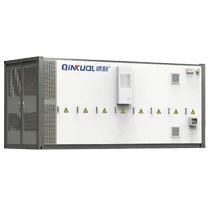
The explosive growth of Artificial Intelligence (AI) has driven a surge in AI Data Centers (AIDC) dedicated to high-performance model training and inference. Compared to traditional data centers (IDC), AIDC exhibits fundamentally different computational load characteristics, placing unprecedented new demands on UPS backup power systems, which are the core of power security.
AIDCs are not steadily running "data warehouses" but high-intensity, highly dynamic "computing engines." Their load characteristics pose significant new tests for power systems.
When core IT loads, primarily GPUs, start up, the load can surge instantly from a low idle state (e.g., 10%) to 150% or even higher overload. In contrast, IDC loads focused on data storage and general networking functions remain relatively stable.

(Data Source: SemiAnalysis)
Synchronization operations during training, task interruptions, or restarts can cause current to fluctuate rapidly and significantly within milliseconds to seconds.

Current rapidly fluctuates within milliseconds to seconds during certain training operations, synchronization, or training interruptions.
These violent, instantaneous, and unpredictable dynamic load characteristics are the core differences of AIDC from traditional scenarios and directly define its new requirements for UPS backup power systems.
The massive inrush current generated during the startup of devices like GPUs requires the backup power system to deliver output several times its rated power to reliably support the load. It also requires millisecond-level charge/discharge rates to instantly respond to rapid load fluctuations, ensuring absolute voltage stability and preventing costly training task failures caused by voltage sags.
The power consumption per AI server rack is significantly higher than IDC servers, reaching 16kW or more. This increases the required footprint of the power distribution system, potentially approaching the area occupied by the IT equipment itself. Large capacity UPS battery systems must possess high power density to optimize power distribution layout and maximize the utilization of valuable data center space.
Policy mandates require new large data centers in China to achieve PUE < 1.3, with national hub nodes targeting < 1.25. This necessitates further reductions in support system power consumption (like cooling), potentially leading to higher ambient temperatures in server rooms. Consequently, backup power systems must demonstrate excellent high-temperature adaptability to ensure service life and safety under these conditions.
AIDCs host extremely high-value computational tasks and hardware. Any power interruption or safety incident could result in massive losses. Backup systems require robustmulti-layered safety mechanisms to strictly prevent thermal runaway and propagation, coupled with rapid and precise fire suppression measures.
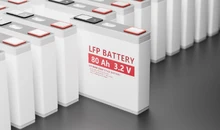
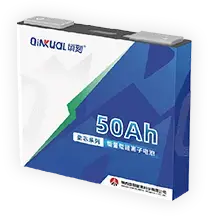
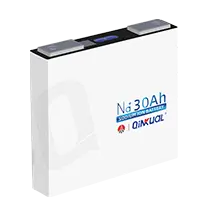
Faced with these six revolutionary requirements, traditional lead-acid battery solutions fall short. High C-rate, high-safety, high-energy-density lithium battery technology has become the essential choice to meet AIDC's stringent demands:
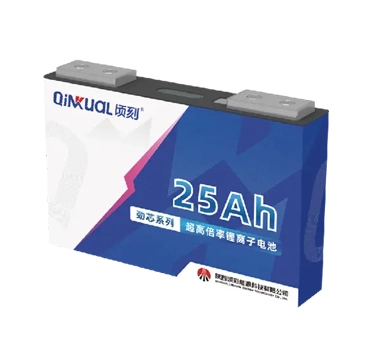
· Specialized Cell Design: Our cells achieve ultra-high power output and low internal resistance through innovations in material systems, power-step electrode design, fast-ion-channel core structures, and structural improvements. This enables discharge rates above 6C, robustly supporting the high overload demands of GPU startups.
· Superior Thermal Control & Longevity: Our cells exhibit a temperature rise of <20°C during continuous 5C discharge and offer a long cycle life of 4000+ cycles. They maintain reliable long-term operation even at high temperatures of 45°C.
· Stringent Safety Assurance: Our cells hold essential safety certifications including UL, UN, GB/T 36276, etc., and pass nail penetration tests without fire or explosion. Automotive-grade manufacturing standards ensure PPB-level cell safety.
· High Power Density: Enabling significant space savings in critical AIDC power infrastructure.