English
In the battery energy storage sector, the tension between long cycle life and high energy density has defined product selection for over a decade. Buyers often ask a fundamental question:
"Can we achieve a long cycle life battery without sacrificing energy density?"
The short answer is: yes—but only within certain chemistry and design constraints. As of 2025, advancements in LiFePO₄ (LFP), LMFP, and next-generation anode materials have made it possible to balance these two attributes, though no chemistry simultaneously maximizes both to their highest theoretical limits. Instead, modern cell engineering allows integrators to optimize for the specific performance window required by their ESS project.
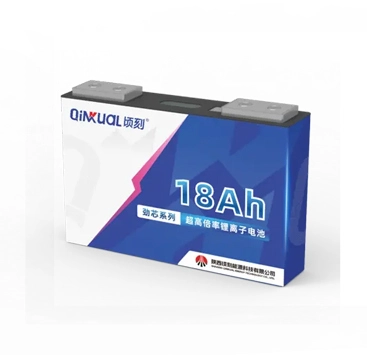
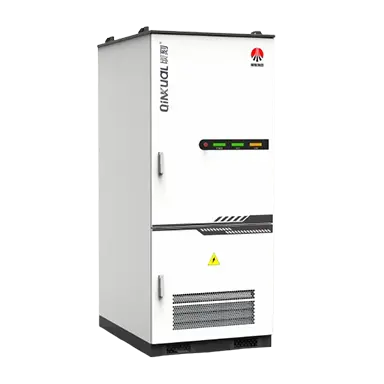
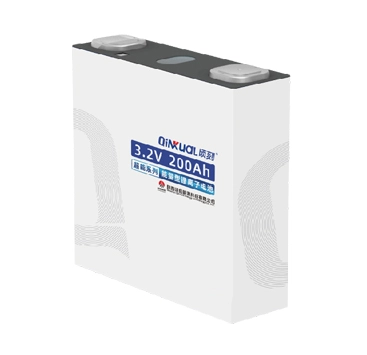
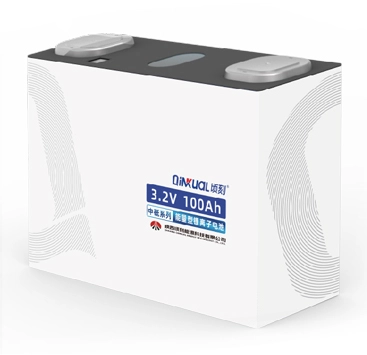
At Qinkual Energy, where we focus on high-C-rate and full-temperature-adaptable prismatic cells, we see this challenge expressed in nearly every procurement conversation. Below is the expert-level breakdown that B2B energy-storage buyers need.
At the chemical level, high energy density is achieved by packing more lithium ions into the electrodes. This results in:
Higher voltage or greater Ah capacity per unit volume
Increased stored energy
Higher power delivery potential
However, higher density often leads to:
Thinner separators
Higher reactivity
Increased mechanical stress
Faster degradation
This is why chemistries like NMC or LCO offer high density but shorter cycle life. In contrast, LiFePO₄'s stable olivine structure is what enables it to be a long lasting battery with 4,000–12,000 cycles, but with lower energy density than NMC.
Trade-off summary:
High energy density → shorter lifespan
Long life battery → moderate energy density
The industry has spent years trying to engineer a midpoint—but not a complete convergence.
For system integrators needing a long cycle life battery, LFP remains the top choice in 2025. Key reasons:
The Fe-P-O bond prevents oxygen release, minimizing degradation.
Low internal resistance helps maintain stable capacity retention.
Improved safety is essential for containerized and home ESS.
Even at 80–90% DOD, LFP retains capacity for years longer than NMC.
Because of this, LiFePO₄ is the preferred option whenever buyers require:
Long cycle battery
Long lasting battery
Low cost per cycle
High C-rate stability
Predictable degradation patterns
Simply put, LFP prioritizes cycle life over raw density—but does so intentionally for safety and longevity.
Although no commercial chemistry simultaneously delivers highest density + longest cycle life, several advancements are closing the gap:
Adds manganese to the LFP structure, resulting in:
~15–20% higher energy density than LFP
Similar safety characteristics
Cycle life between LFP and NMC
LMFP is not as long-lasting as classic LFP but is rapidly gaining traction for clients needing a balance.
LTO offers:
20,000–30,000 cycles
Extreme C-rate performance
Ultra-fast charging
But:
Energy density is too low for large ESS
Cost remains significantly higher
It is the ultimate long life battery, but not a solution for density-focused systems.
Silicon-blended graphite anodes are pushing NMC cycle life beyond 2,500–3,000 cycles—a major improvement, though not yet competitive with LFP for durability.
Solid electrolytes improve safety and energy density, but current commercial solutions are:
Expensive
Limited in cycle life
Not widely available in prismatic ESS formats
For now, solid-state remains a future pathway, not a mainstream ESS option.
In real-world ESS design, achieving both long cycle life and reasonable energy density is possible by optimizing not just chemistry—but system architecture.
Industry engineers often use:
→ Minimal wiring
→ Lower internal resistance
→ Greater energy density at the system level, even if cell density is moderate.
→ Better thermal performance
→ Reduced degradation
→ Extended cycle life at high output.
→ Improved balancing
→ Reduced stress on electrodes
→ Better real-world cycle life
For example:
Cycling LFP at 70% DOD significantly increases lifespan, effectively delivering both density and longevity in multi-year projects.
In many cases, system design—not chemistry—is what lets project developers achieve both metrics simultaneously.
For commercial and industrial energy storage, the decision between cycle life and density depends entirely on the application:
You need 6,000–12,000 cycles
You run daily cycle operations (solar ESS, microgrids)
You want lowest cost per cycle
Safety is a top priority
Long-term OPEX matters more than energy density
Space constraints are critical
High energy throughput is required
Cycle life demands are moderate
Weight limitations matter (EV, marine, mobility systems)
Most stationary ESS buyers find LFP the best compromise—especially as prismatic cell engineering continues to improve.
We can achieve a balanced combination of long cycle life and high energy density—but not the absolute peak of both characteristics in the same chemistry.
However, through:
LMFP advancements
Prismatic LFP cell optimization
Improved electrode formulations
Smarter thermal management
More advanced BMS logic
2025 systems are closer than ever to achieving multi-thousand-cycle lifespans with competitive density.
For the majority of ESS developers, integrators, and distributors, the optimal solution is:
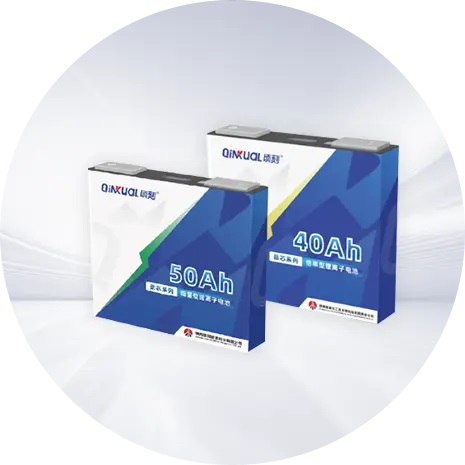
High-quality LiFePO₄ prismatic cells with enhanced C-rate and thermal adaptability, such as those produced by Qinkual Energy.
This configuration delivers the best practical blend of:
Durability
Safety
Cost efficiency
Reasonable system-level density
—making it the preferred choice for long-term storage projects worldwide.
The future of energy storage is not about choosing between a long cycle life battery and a high-density solution. Instead, it is about selecting the right chemistry and system design that meets the operational goals of your project.
As an industry-leading manufacturer of full-temperature, ultra-high-C-rate LiFePO₄ prismatic cells, Qinkual Energy specializes in delivering batteries that provide:
Long cycle life
High reliability
Optimized energy density
A long lasting battery performance suitable for utility-scale and commercial ESS
If you need detailed spec sheets, procurement guidance, or engineering support, our team is ready to assist.