English
Artificial Intelligence is accelerating the build-out of high-density computing infrastructure. As AI Data Centers (AIDC) scale to support large language models, HPC, and cloud AI services, power demand becomes more dynamic—and more expensive to manage.
That’s why energy storage is moving beyond “backup power” into a system-level tool for UPS ride-through, peak shaving, grid frequency regulation, and renewable integration. This article breaks down the real requirements of AIDC energy storage—and how LiFePO₄ (LFP) prismatic cells and emerging sodium-ion batteries fit into modern deployments.
GPU/accelerator clusters can create rapid load changes. Even when the grid is stable, internal power chains experience transient stress—raising the need for instant-response energy storage.
AIDC sites operate continuously. Any outage is costly, so reliability, predictable behavior, and safety matter as much as peak power.
Energy storage increasingly supports operational economics through peak shaving battery storage and better energy management.
UPS applications prioritize immediate discharge for ride-through and short-duration support.
Typical cell priorities:
High C-rate / high discharge current
Stable voltage behavior under pulse loads
Consistent quality and safety margin
For ESS battery storage used in peak shaving, time shifting, and grid interaction, priorities shift toward:
Long cycle life battery performance (TCO)
Efficiency and thermal stability
Modular scaling from cabinets to containers
Selection usually starts from duty cycle (UPS bursts vs. daily ESS cycling), site temperature, and the scaling target (cabinet vs. container). Use the table below as a fast filter.
| Cell Category | Typical AIDC Use Case | Key Value | QINKUAL Model(s) |
|---|---|---|---|
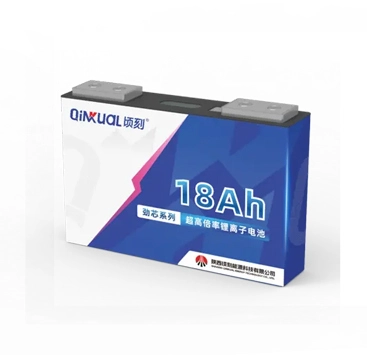
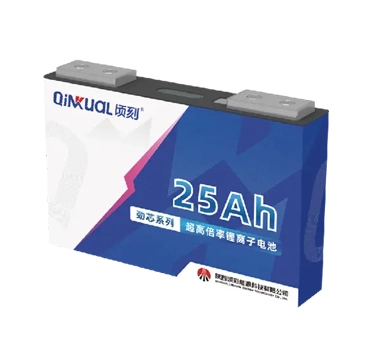
| Ultra-high C-Rate Cell | UPS ride-through, instant backup, fast transient response | Very high discharge capability (high C-rate) | 18Ah 80C/100C Prismatic Cell; 25Ah 8C/15C Prismatic Cell |
| Ultra-low Temperature Cell | Cold-region sites, outdoor container, winter commissioning | Reliable discharge in cold weather | 40Ah -40℃ 10C Discharge Prismatic Cell |
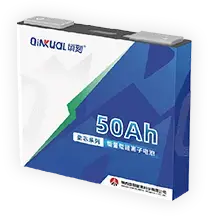
| High-power Cell | High-power output under demanding loads | Stable high power delivery | 40Ah 6C/6C Prismatic Cell; 45Ah 3C/5C Prismatic Cell; 50Ah 3C/6C Prismatic Cell |
| Long Cycle Life Cell (Medium Capacity) | Daily cycling ESS, peak shaving, energy shifting | Lower replacement frequency, better TCO | 100Ah 2C/6C Prismatic Cell; 200Ah 1C/2C Prismatic Cell |
| Large Capacity Cell (Grid/Utility Scale) | Containerized BESS, grid interaction, large-scale expansion | Higher system capacity per string | 314Ah 1P/1.5P Prismatic Cell; 330Ah .5P/.5P Prismatic Cell |
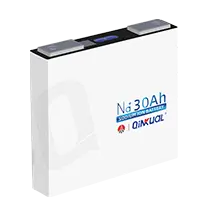
| Sodium-ion Battery | Alternative chemistry evaluation, future ESS roadmap | Material diversification option | 30Ah 2C/2C Sodium-ion Battery |
Below is a practical, engineering-oriented checklist to map your AIDC requirement to the right cell family.
Choose: Ultra-high C-rate prismatic cells
Recommended models: 25Ah 8C/15C
Why it fits:
Fast discharge response for UPS ride-through
Supports high discharge current events
Choose: Ultra-low temperature LFP cells
Recommended model: 40Ah -40℃ 10C Discharge
Why it fits:
More reliable discharge performance in low temperatures
Reduces cold-weather derating concerns for outdoor installations
Choose: High-power LFP prismatic cells
Recommended models: 40Ah 6C/6C / 45Ah 3C/5C / 50Ah 3C/6C / 100Ah 2C/4C
Why it fits:
Designed for high current discharge and stable power delivery
Suitable where power density is a priority
Choose: Large capacity prismatic cells
Recommended models: 314Ah 1P/1.5P or 200Ah 1C/2C
Why it fits:
Better lifecycle cost for frequent cycling
Strong fit for ESS battery storage operation
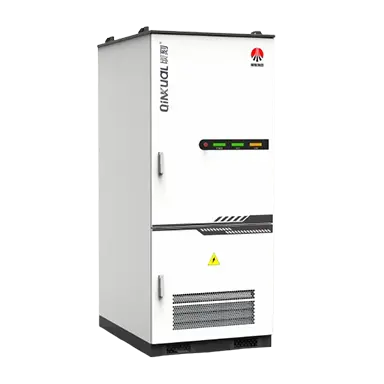
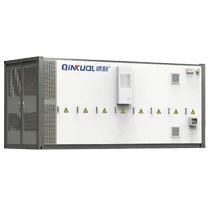
As power density increases, heat removal becomes a system bottleneck. For larger deployments (cabinet and container scale), many operators evaluate liquid cooling energy storage system designs to maintain more uniform temperatures, improve stability, and extend battery service life—especially under high-power duty cycles.
Shaanxi QINKUAL Energy Technology Co., Ltd. is a subsidiary of Shaanxi Coal & Chemical Group, a state-owned mega energy and chemical group. As the Group’s fully invested lithium battery manufacturing enterprise, QINKUAL focuses on “Full Temperature Adaptability — Ultra High C-Rate” cell technology platforms.
With 10+ years of R&D accumulation across battery materials, electrochemical systems, and process development, QINKUAL supports power-requiring applications spanning energy storage and industrial power systems.
To speed up cell selection and system sizing, prepare:
Application: UPS / ESS / peak shaving / frequency regulation
Targets: peak kW, required runtime, expected daily cycles
Temperature range: ambient min/max, indoor vs outdoor
Integration format: rack/cabinet/container, cooling preference (air vs liquid)
Safety/compliance expectations and site constraints
This is the first one.