English
AI data centers are built for performance—but performance demands power. For operators and integrators, the challenge is no longer “Do we need batteries?” but which battery storage solution best supports uptime, cost control, and future expansion.
This blog walks through the most common AIDC scenarios (UPS ride-through, peak shaving, scaling to BESS) and provides a simple, selection-first way to choose the right LiFePO₄ prismatic cells or sodium‑ion batteries.
AIDC projects typically face:
Sudden load steps from dense compute clusters
Demand charges and rising energy costs (need for peak shaving battery storage)
High expectations for uninterrupted uptime (UPS readiness)
Thermal constraints that push the adoption of cabinet or container solutions (often with enhanced cooling)
A well-matched energy storage system (ESS) reduces operational risk and improves energy efficiency.
Use this table to narrow down options before deeper engineering sizing.
| Your AIDC Need | Best Cell Category | Recommended QINKUAL Model(s) | Typical Outcome |
|---|---|---|---|
| Instant ride-through / UPS response | Ultra-high C‑Rate | 25Ah 8C/15C | Fast backup power response speed |
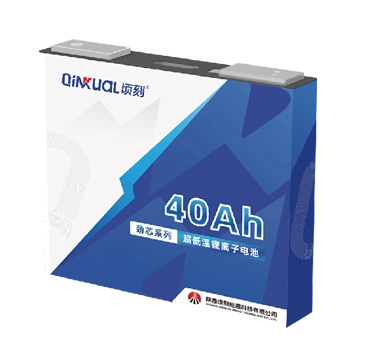
| Cold-region operation / outdoor container | Ultra-low Temperature | 40Ah -40℃ 10C Discharge | Better low-temp reliability |
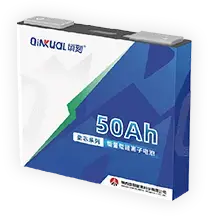
| High power output under load | High-power Cell | 40Ah 6C/6C; 45Ah 3C/5C; 50Ah 3C/6C;100Ah 2C/4C | Stable high current delivery |
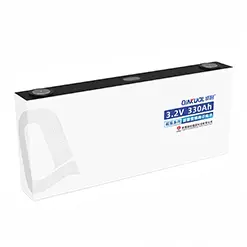
| Large-scale expansion (BESS) | Large Capacity | 200Ah 1C/2C;314Ah 1P/1.5P | Easier scaling to MWh systems |
Choose: Ultra-high C‑rate prismatic cells
Suggested models: 25Ah 8C/15C
Best for: UPS response, short-duration high-current support
Choose: Ultra-low temperature LFP cells
Suggested model: 40Ah -40℃ 10C Discharge
Best for: cold commissioning, outdoor installations, harsh climates
Choose: High-power LFP prismatic cells
Suggested models: 40Ah / 45Ah / 50Ah / 100Ah high-power series
Best for: high current discharge where power density matters
Choose: Large capacity prismatic cells
Suggested models: 200Ah / 314Ah
Best for: scalable BESS energy storage solutions and grid-connected planning
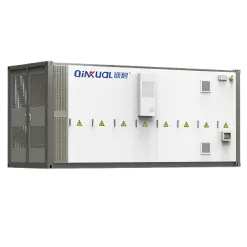
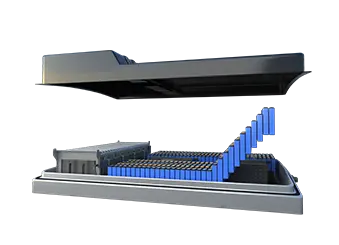
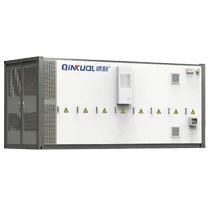
As you scale, integration matters as much as cell choice. Many projects start with an energy storage cabinet approach for modular expansion, then move toward containerized configurations for larger capacity needs. If your duty cycle is high-power or temperature control is strict, enhanced thermal design (including liquid cooling architectures) can improve consistency and service life.
Subsidiary of Shaanxi Coal & Chemical Group (state-owned mega energy & chemical group)
Focused technology platform: Full Temperature Adaptability — Ultra High C‑Rate
10+ years of R&D accumulation in materials, electrochemical systems, and process development
Product matrix covering high-rate, low-temperature, high-power, long-cycle, and large-capacity prismatic cells
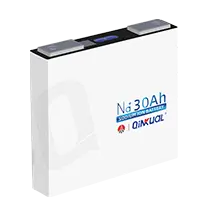
Sodium-ion technology option for next-generation energy storage planning
Send the following and QINKUAL can respond faster with a matching cell category and configuration direction:
UPS or ESS? Peak shaving or frequency regulation?
Peak kW, required runtime, daily cycles
Ambient temperature range (min/max), indoor/outdoor
Preferred format: rack / cabinet / container; cooling preference
Any safety/compliance requirements and delivery timeline